
Madison County Wanted Fugitives
Madison County posts no most-wanted page. No warrant wall or photo list appears on the sheriff's site either. The Madison County Courts page points visitors toward Idaho Judiciary resources and victim notification instead. The county has no wanted roster there. A sheriff's office can still hold active warrant information without posting a curated list. Any list that does appear is selective rather than complete. Agency websites change often. Browse the current navigation before assuming the gap is permanent.
Need a warrant answer? The Idaho iCourt portal returns public unsealed case information when you have the record number and access rules allow it. It is a case-search tool, not a fugitive list. An empty search proves nothing. A warrant could still exist. The Madison County Courts landing page serves as the verified local routing source, and it names no one as wanted.
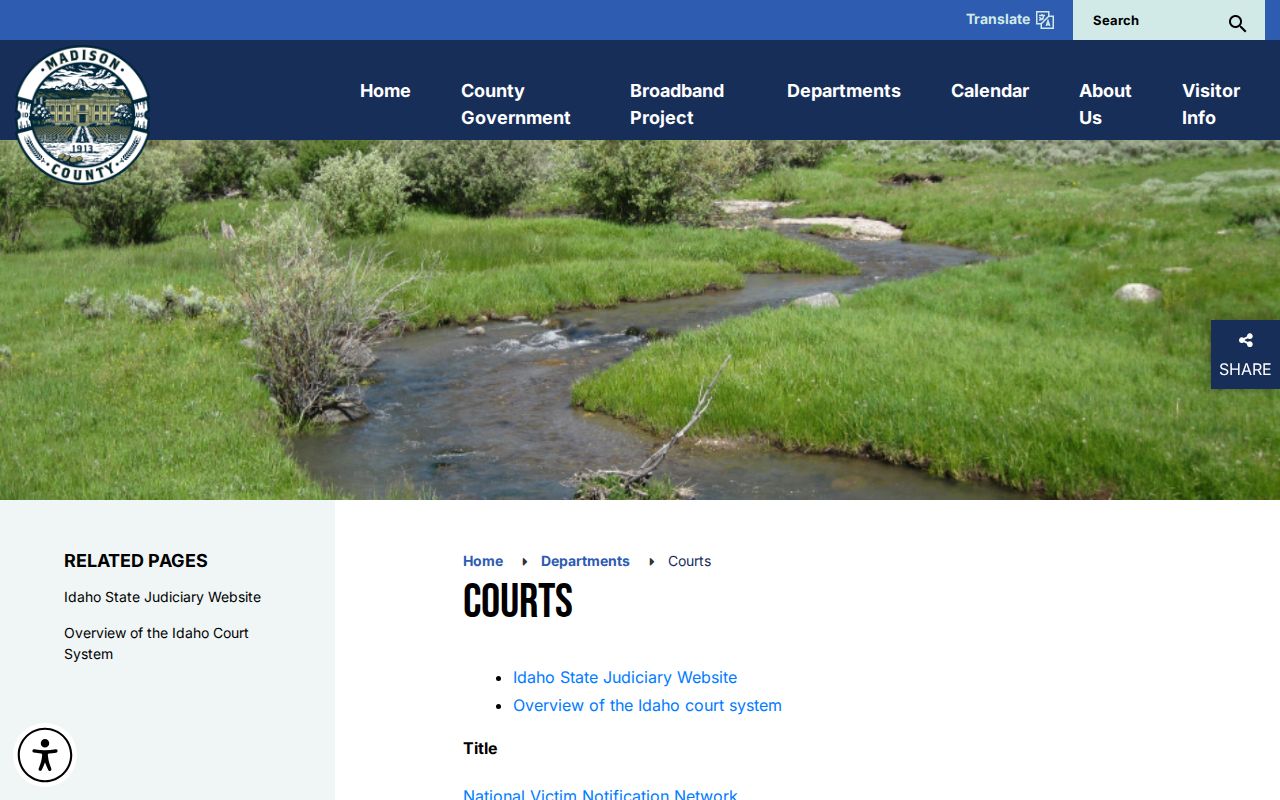
The result is that any wanted inquiry in Madison County stays anchored to an official record rather than a copied image or a social media rumor.
What a Wanted Listing Would Show
There is no live Madison County listing to walk through. So start with the record questions. The table below lays out what to answer before trusting any future sheriff notice. A photo with no agency date and no stated warrant basis is weak evidence on its own.
| Record element | What to verify |
|---|---|
| Name and identity | Exact spelling, aliases, and an agency source. A similar name is not identity proof. |
| Photo | Whether the image came from the sheriff or another official source, plus the date and caption. |
| Warrant or case basis | The court or record number and the public status of the underlying record. |
| Update date | When the agency last confirmed the entry. No Madison County cadence was verified. |
| Tip instruction | The official number or form and the direction not to make contact with the person. |
| Custody or disposition | Whether the person is wanted, held, released, transferred, or later resolved in court. |
A court record and a public-safety notice answer different questions. Idaho Court Administrative Rule 32 can limit what a court releases, while a sheriff notice may be pulled or updated at any time without touching the underlying court file.
How to Read the Wanted Record
With no verified Madison County list live, the safe path starts with the source. Find the correct official custodian. Report what you know to that office. The job is never to investigate a person on your own in the field.
- Open the official sheriff or county courts page and confirm the URL, agency name, and date of the notice.
- Read the warrant or case number, charge wording, and caution language. Do not infer a final court outcome from a short notice.
- Compare the name and other identifiers with the official court record when the record is public. Do not rely on a copied photo.
- If the person is recognized, use the official tip or dispatch route. Do not approach, follow, or send private details to an unofficial account.
- For the booking record, custody state, or original photo, use the Madison County records path described on the county booking and busted-mugshots page.
A wanted listing can be old. It can be selective. It may even tie to a warrant already served. Newsroom posts linger online long after a case moves forward. Keep the source date. Confirm the current status with the agency before acting.
Madison County Tip and Safety Contacts
Madison County has no verified most-wanted page. There is no Crime Stoppers program, reward schedule, or anonymous tip line. The sheriff's dispatch line can still route a non-emergency question. Staff may not share every warrant detail, so treat the call as a starting point, not a guarantee.
Madison County Sheriff's Office
145 E Main St
Rexburg, ID 83440
Main: (208) 372-5000
Dispatch and non-emergency call or text: (208) 372-5001
Jail: (208) 372-5002
Madison County Courthouse
159 East Main
PO Box 389
Rexburg, ID 83440
(208) 359-6252
Use the clerk or an attorney for a legal status question.
Call 911 for immediate danger. A good tip gives officials the location, time, and safety facts they need. Never take on the investigator's role yourself.
Check a Madison County Warrant
Madison County has no dedicated public warrant portal. The court route is the official starting point. Idaho's court-access rules bound what it can show. The sheriff can field a custody or safety question. A phone call alone, though, is not a warrant certificate.
- Start with Idaho iCourt Smart Search. Try the party name, then the case or record number if one is known.
- Use the court's available filters and confirm that the result is for Madison County and the right person.
- If a record is missing, ask the Madison County Courthouse or an attorney what can be confirmed. Sealed or exempt records may not appear.
- For a current custody question, call MCSO dispatch or the jail. Do not ask a private page to certify a warrant.
- If a warrant may affect the person searching, speak with an Idaho attorney or the court before taking action. Do not attempt to avoid, confront, or self-enforce.
Access rules come from the Idaho Court Administrative Rule 32 framework. That rule covers sealing, exemptions, and redaction. Sealed or exempt cases never appear in results, as the portal notices state plainly. Some arrest warrants also stay exempt while pending. What you can see depends on the record and its access rule. For searching, use the Idaho iCourt Smart Search portal. It is the official public case-search route.
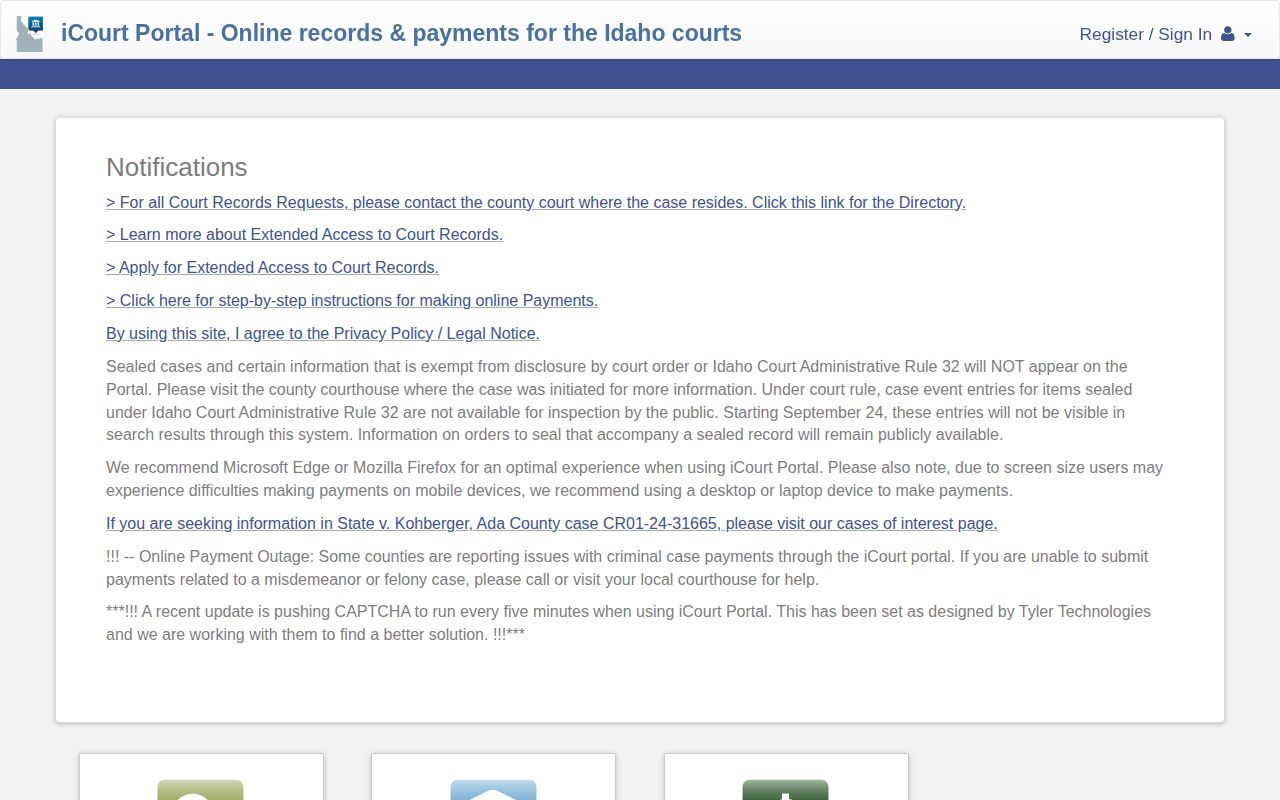
The portal is a case-search tool, not a photo wall. For the underlying booking details, use the official Madison County request path.
Warrant and Court Record Types
Access turns on the record type and its status. The Madison County sources support a few narrow distinctions, listed below. They do not support the idea that every local warrant is searchable by name.
| Record type | Access point and limit |
|---|---|
| Search or arrest warrant | Certain unreturned warrants may be exempt while pending. A public iCourt result is not a complete warrant certificate. |
| No-contact order | The court tutorial indicates that an unsealed order may be found by record number, subject to public-access rules. |
| Wanted-list entry | A curated agency notice, not a list of every warrant. Madison County's current public list was not verified. |
| Booking record | MCSO intake record. It can show a charge as booked, but it does not itself prove a warrant or a conviction. |
For a record that matters, ask the court or an attorney to explain it. The Idaho Court Administrative Rule 32 page is included below because access limits shape any warrant check.
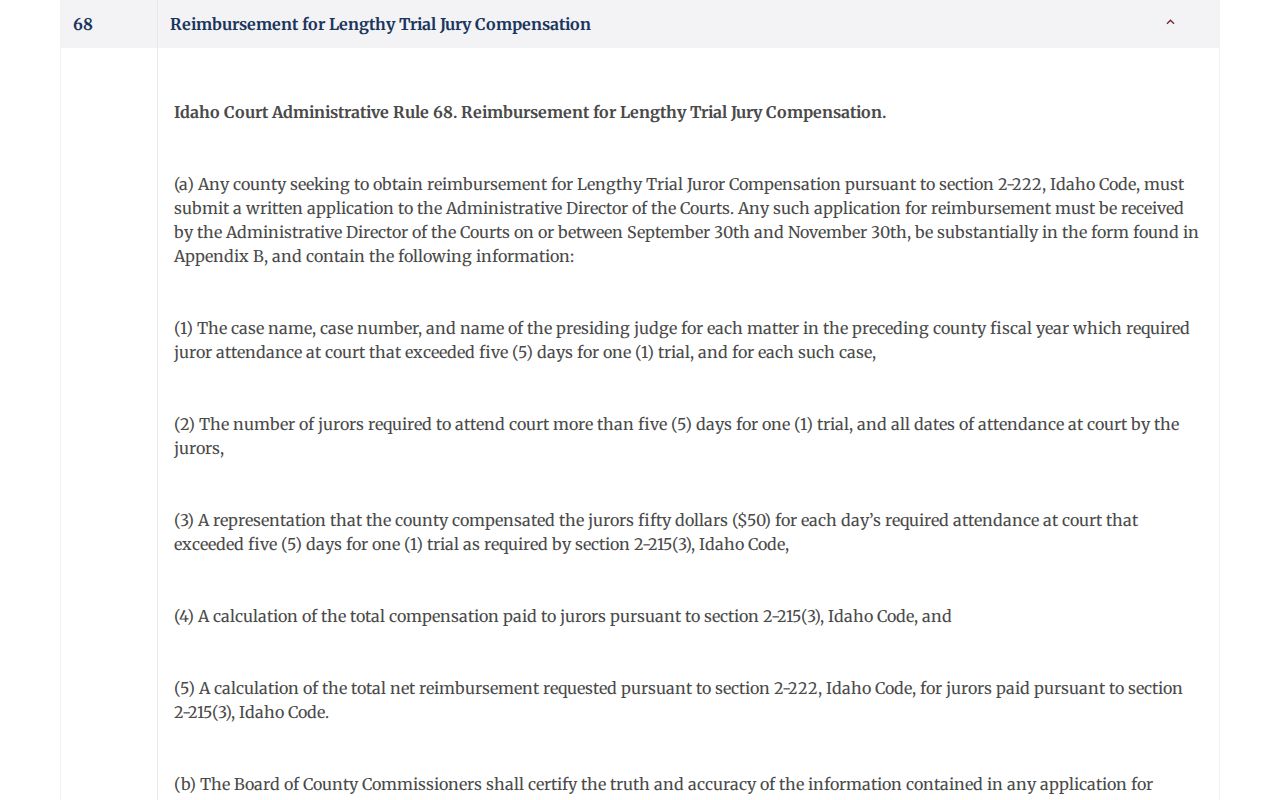
The rule page helps explain why a case search might omit a warrant. It says nothing about whether any person is wanted.
Wanted Does Not Mean Convicted
When you locate a public case, check its procedural stage and date. A warrant is one status. A court outcome is another. Each tells a different part of the story.
Need the original booking record? Use the Madison County jail and NextRequest routes. The court portal continues the case story, but it does not replace the county custodian's booking file. A later record may show someone in state custody, on parole, or on probation. In that case, search the Idaho Department of Correction Resident/Client Search. IDOC is a separate custody layer. It is not a Madison County jail or wanted-list source.
Why Madison County Has No Warrant Wall
The sheriff's office leans on a few digital tools rather than a wanted page. Its homepage points to CodeRED, Idaho Offender Watch, Facebook, and X. CodeRED handles emergency and community alerts. Offender Watch is a sex-offender registry. None of them works as a most-wanted list, and no structured fugitive archive turned up anywhere on the site.
Social media leaves gaps, too. Posts get trimmed or deleted without warning. A sheriff's post can still be a solid lead worth chasing down. Yet it can never stand in for the court record, a call to the agency itself, or a formal records request. Filling this page with names pulled from some unofficial site would be the wrong move.
Go source-first instead. Courts hold the public case status. The sheriff's office answers custody questions and routes requests. Call 911 if someone poses an immediate danger. The record always belongs to the agency that made it or keeps it.